
The best time to visit Roatan depends on what you’re looking for — and the good news is, there’s more flexibility than most people expect.
Many visitors are surprised by how enjoyable Roatan can be year-round, with each season offering a slightly different experience rather than a clear “good” or “bad” time to visit.
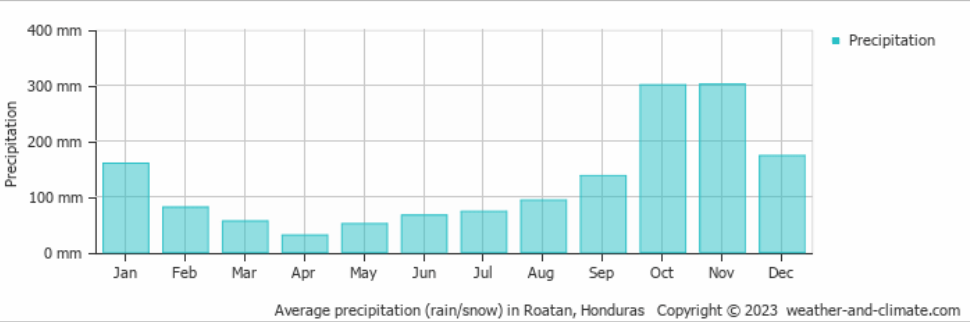
Roatan offers warm, tropical weather year-round, making it an easy destination no matter when you visit. Temperatures are consistently comfortable, typically ranging from the mid-70s to high-80s, with warm ocean water (typically in the 80s (26+c)) that’s perfect for swimming, snorkeling, and diving in every season.
Like most Caribbean destinations, Roatan has both drier and wetter periods — but “rainy season” here doesn’t mean days of nonstop rain. Showers are often brief and can pass quickly, frequently followed by sunshine.
Trade winds help keep the island feeling comfortable, especially along the north shore (leeward side-protected side), where a steady breeze and calm waters often create excellent conditions for beach time and reef activities.
What surprises many first-time visitors is how rarely the weather interferes with their trip — even during the wetter months.
The result is a destination where you can plan your trip with confidence. Whether you’re visiting for perfect blue-sky days, fewer crowds, or simply a relaxing escape, Roatan’s climate makes it easy to enjoy the island in any month of the year.
 When Is Rainy Season in Roatan?
Roatan’s rainy season generally begins in October and runs through early January, with October and November typically bringing the most rainfall. But the rainy season doesn’t necessarily mean days of nonstop rain. Many days include periods of rain followed by sunshine, although longer stretches of wet weather can occur.
If you’re planning a Roatan vacation during these months, you’ll usually find fewer visitors and a quieter island, but you should also be comfortable with less predictable weather. If sunshine and beach time are your highest priorities, the drier months are generally a safer choice.
One advantage of visiting during rainy season is that Roatan feels noticeably quieter. Beaches, restaurants, and popular attractions may be less crowded, and the island’s tropical vegetation is especially lush. For travelers who don’t mind being flexible around the weather, it can still be a very enjoyable time to experience Roatan.
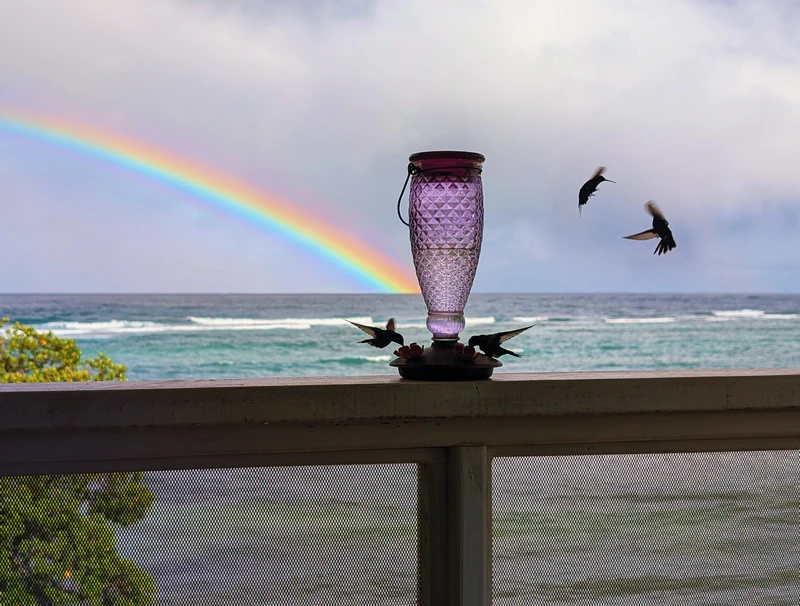
Many travelers automatically rule out Roatán during the rainy season. In our experience, that’s a mistake. Weather can be less predictable, but travelers willing to accept that tradeoff are rewarded with a quieter, greener island and far fewer crowds.
Each season in Roatan has its own advantages — and the best choice depends on what matters most to you.
NOTE: Rain typically doesn’t last all day — it’s more often quick showers that feel refreshing.

| Month | Weather | Crowds | Notes |
|---|---|---|---|
| Jan | Warm, breezy | Medium | Great temps, wind can pick up |
| Feb | Warm, breezy | Medium | Good visibility, occasional wind |
| Mar | Warm, improving | Medium–High | Start of calmer seas |
| Apr | Warm, sunny | High | One of the best months overall |
| May | Hot, calm | Medium | Excellent snorkeling conditions |
| Jun | Hot, calm | Medium | Warm water, great visibility |
| Jul | Hot, calm | Medium | Peak summer feel, ideal water |
| Aug | Hot, calm | Medium | Great conditions, fewer crowds than spring |
| Sep | Warm, occasional rain | Low | Quiet, lush, great value |
| Oct | Warm, more rain | Low | Rain increases, still plenty of good days |
| Nov | Warm, more rain, mixed weather | Low | Transition month, fewer visitors |
| Dec | Warm, breezy, occasional rain, some mixed weather | Medium–High | Holidays bring more travelers |

One of the great things about Roatan is that snorkeling and diving are excellent year-round, though conditions can vary slightly by season and time of day.
Many guests find that having easy access to the water makes a bigger difference than the exact time of year they visit.
In general, the calmest water and best visibility are typically found in the mornings, when winds are lighter, and the sea is at its smoothest. This makes early outings especially rewarding, whether you’re snorkeling from shore or heading out on a dive.
Seasonal weather patterns can also play a role. During the drier months, conditions are often more consistently calm, while in the rainy season, you may experience brief showers or occasional changes in visibility. That said, rain usually passes quickly and rarely lasts all day.
Water temperatures remain warm throughout the year, so you can comfortably enjoy the reef in any season — no wetsuit required for most people.
And one of the biggest advantages of staying in the right location is the flexibility it offers. When the reef is just offshore, you can wait for ideal conditions and head out when the water is at its best — no schedules, no pressure.
If you’re looking for a quieter experience and the best overall value, the less busy months in Roatan can be a great choice. During these periods, the island feels more relaxed, beaches are less crowded, and it’s easier to enjoy restaurants, tours, and activities at your own pace.
These times often coincide with more flexible availability, which can occasionally create opportunities for shorter stays or last-minute openings. For travelers with flexible dates, this can be one of the easiest ways to experience Roatan without the peak-season demand.
Even during these quieter periods, the weather is still warm, the water is inviting, and there are plenty of beautiful days to enjoy the beach and the reef.
In many cases, the difference isn’t what you can do — it’s how much more relaxed and uncrowded the experience feels.
For many guests, this ends up being one of the best times to visit — not because of the weather, but because of how much more relaxed the overall experience feels.
The overall climate in Roatan is pretty much the same year-round. Our high season runs from February through May.
Summer is considered a low season, not because of climate change, but because much of the world has its very best weather at this time of year, thereby making leisure travel unnecessary.
People tend to prefer staying at home rather than spending money to get away.
As the planet cools off in September, our climate is excellent. Still, it officially becomes hurricane season in the Caribbean, which runs from August to November, and this tends to scare away some visitors. The last time Roatan got hit by a hurricane was Hurricane Mitch in 1998. Roatan is outside the “Caribbean Hurricane Belt.”
Our rainy season starts in October and typically ends in early January, so the fall is not part of our high season and is the one time period when you are most at risk of less-than-great weather. This is the time of year when it “may” rain all day long on occasion.
As for temperature, summer is typically only a few degrees warmer than winter; however, the trade winds tend to weaken, making it feel a bit warmer.
Some people love the summer because there are a lot fewer people visiting the island, fewer cruise ships, typically resulting in no lines and no reservations required.
One Week to Be Aware Of: Semana Santa
Every year, it falls in the week before Easter Sunday. In Central America, this week is called Semana Santa or Holy Week. However, our North American visitors would best describe it as Spring Break on steroids, and there ain’t anything holy about it.
This island gets ridiculously crowded, loud, and crazy. Many restaurants close for part or all of this week, and we recommend that, unless you enjoy this type of environment, you consider visiting at a different time.
Search the internet for Semana Santa, and you’ll find out exactly when it occurs in Honduras each year.
The best time to visit Roatan really comes down to what matters most to you — and the good news is, there’s no wrong answer.
If you’re looking for the most consistent weather and calm conditions, the drier months are a great choice. If you prefer fewer crowds and a more relaxed pace, the shoulder seasons can be especially enjoyable. And if value and flexibility are your priority, quieter months often offer the best opportunities.
What surprises many visitors is how enjoyable Roatan can be year-round. Even during the wetter months, rain is often brief, and there are plenty of beautiful, sunny stretches throughout the day.
In the end, the timing matters less than the experience — and choosing the right place to stay can make any time of year feel like the perfect time to visit.
In many cases, the difference isn’t what you can do — it’s how the experience feels.
Every season in Roatan has something to offer — the key is finding the timing that’s right for you.
Check availability and start planning your stay.
Stay Up To Date!